Brief by Shorts91 Newsdesk / 06:44am on 23 Sep 2025,Tuesday Business
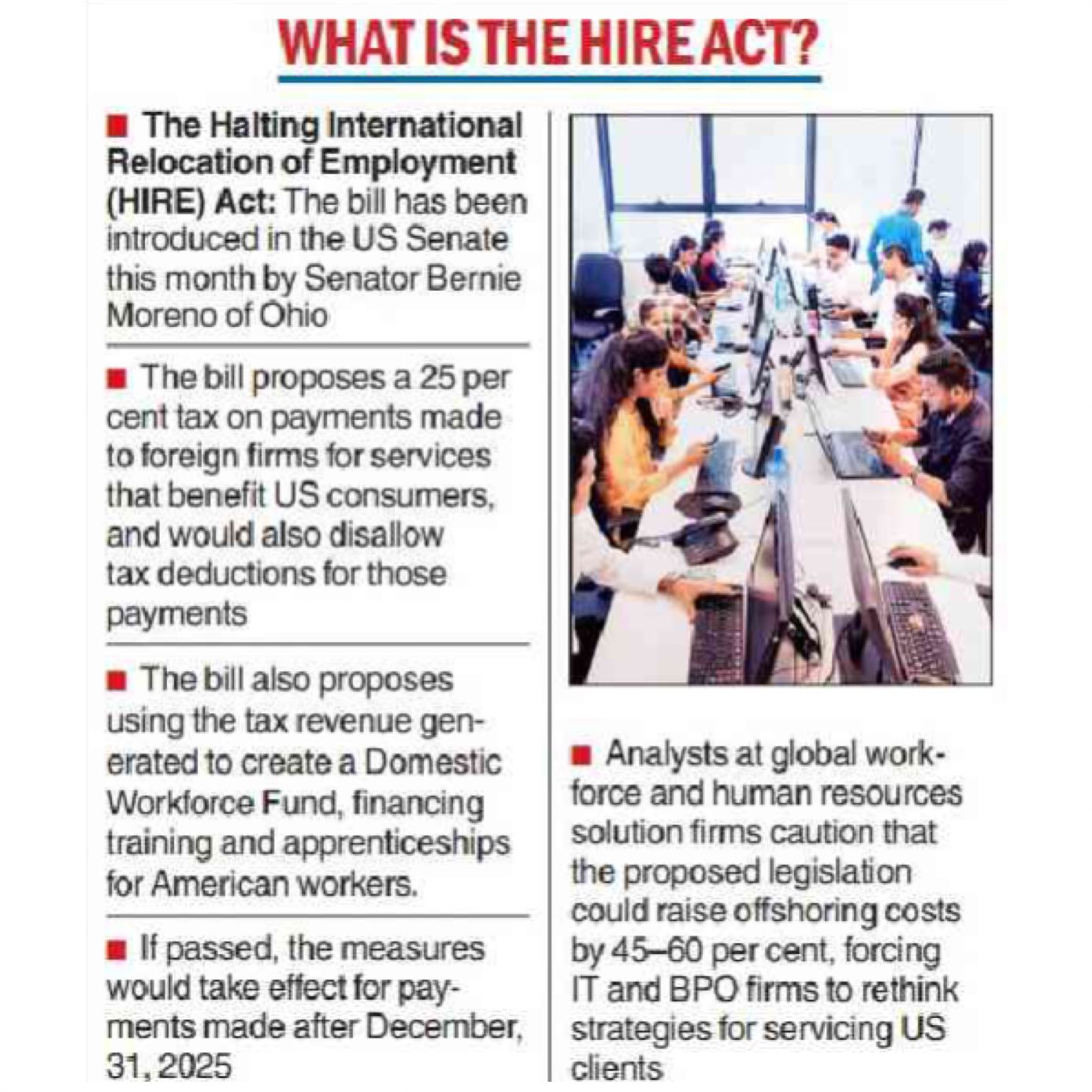
The Trump administration's sharp increase in H1B visa fees was expected to boost outsourcing to India as companies seek cost-effective alternatives. However, this anticipated surge faces potential disruption from new legislation. Senator Bernie Moreno of Ohio has introduced the Halting International Relocation of Employment (HIRE) Act in the US Senate this month. The Republican-sponsored bill could significantly dampen the expected rise in Indian outsourcing if enacted in its current form. This legislative development represents a dual approach to restricting foreign employment practices - both through increased visa costs and potential legal barriers to offshore outsourcing. The proposed act signals continued political pressure on companies utilizing international workforce solutions, potentially reshaping global business strategies. (PC: The Telegraph)
Brief by Shorts91 Newsdesk / 04:36am on 22 Sep 2025,Monday Business
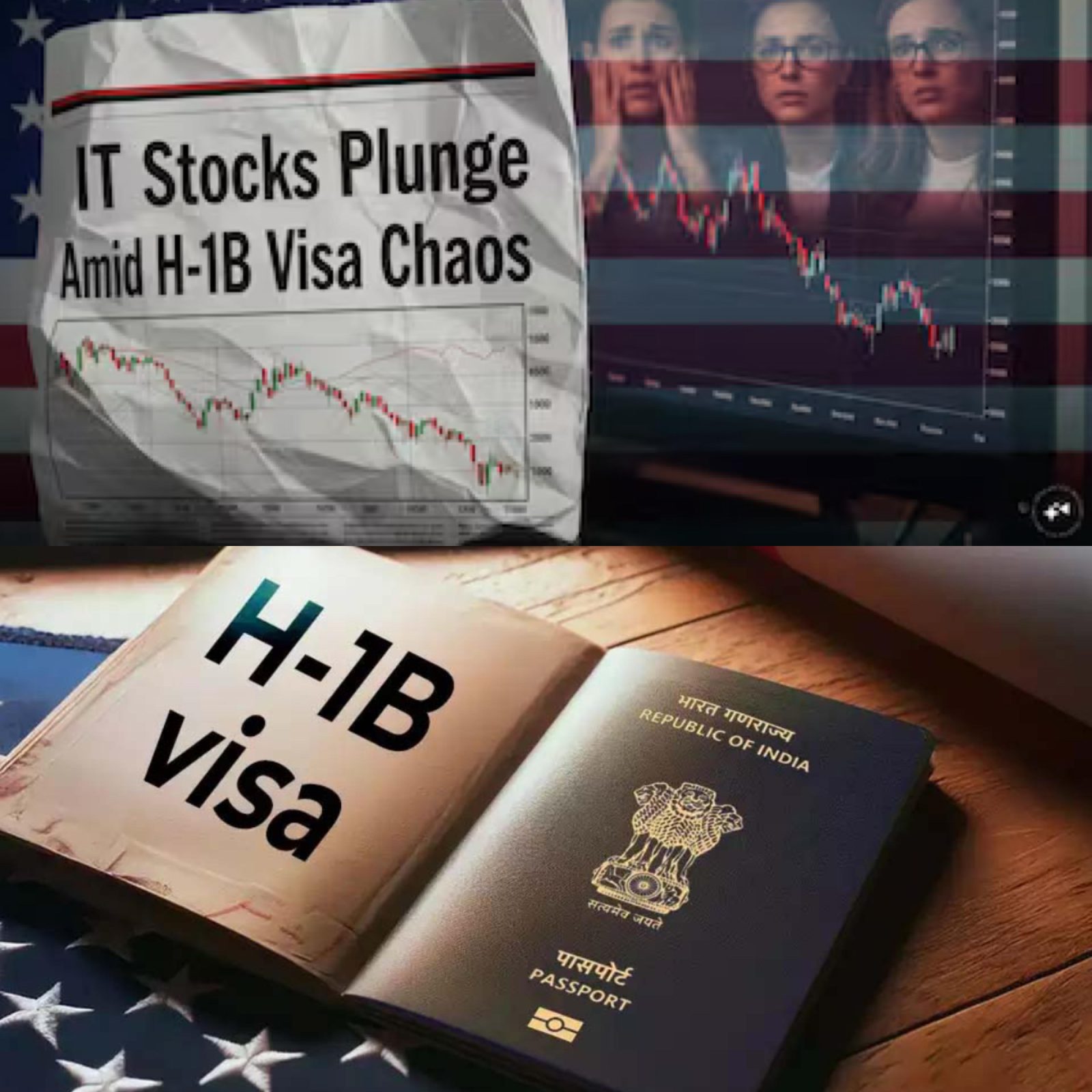
Indian IT stocks plummeted up to 6% on Monday following H-1B visa turmoil. Tech Mahindra led losses, opening 6% lower at Rs 1,499 from previous close of Rs 1,533. The selloff followed Trump administration's proclamation hiking H-1B visa fees to $100,000 with one-day deadline, causing panic among visa holders. However, clarification emerged that this applies only to new applicants as one-time payment, not renewals or existing holders. Nifty IT fell 2.54% to 35,648 by 9:30 AM, with all 10 sectoral stocks declining. Major losers included Persistent Systems, LTI Mindtree, and Mphasis. Analysts expect knee-jerk reactions but note reduced H-1B dependence could provide relief for IT companies.
Brief by Shorts91 Newsdesk / 04:50am on 19 Sep 2025,Friday Business
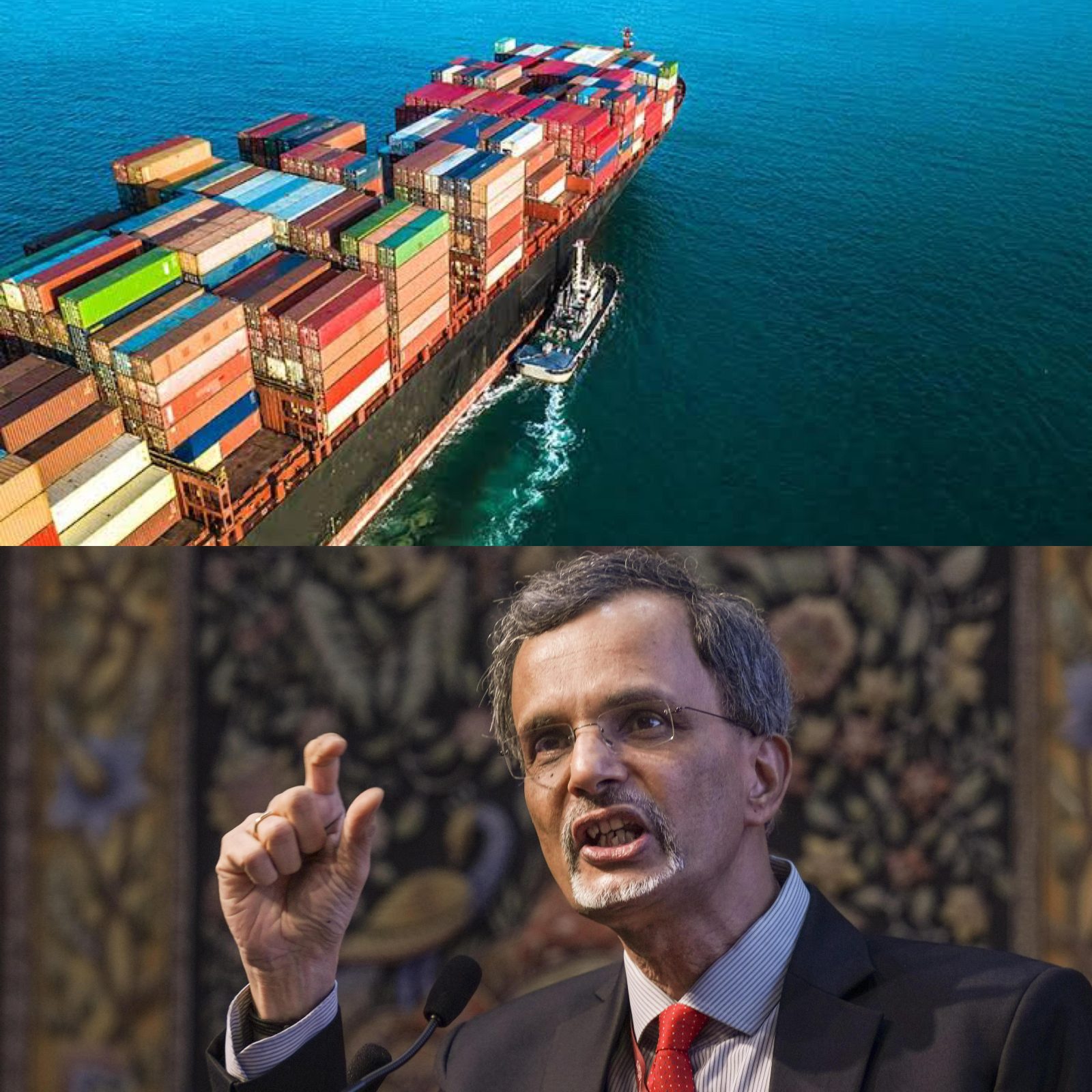
Chief Economic Adviser V Anantha Nageswaran expressed optimism that the 25% penal tariff imposed by the United States on certain Indian imports will likely be withdrawn after November 30. Speaking at a Merchants' Chamber of Commerce and Industry event in Kolkata, Nageswaran stated the duties on certain products are expected to be withdrawn after November 30. The CEA noted that both the original reciprocal tariff of 25% plus the penal tariff of 25% were not anticipated, believing geopolitical circumstances may have led to the second 25% tariff. This signals potential easing of trade restrictions amid ongoing India-US negotiations and improving bilateral ties, offering relief to Indian exporters affected by these additional duties. (PC: Finance Veda & Mint)
Brief by Shorts91 Newsdesk / 04:48am on 19 Sep 2025,Friday Business
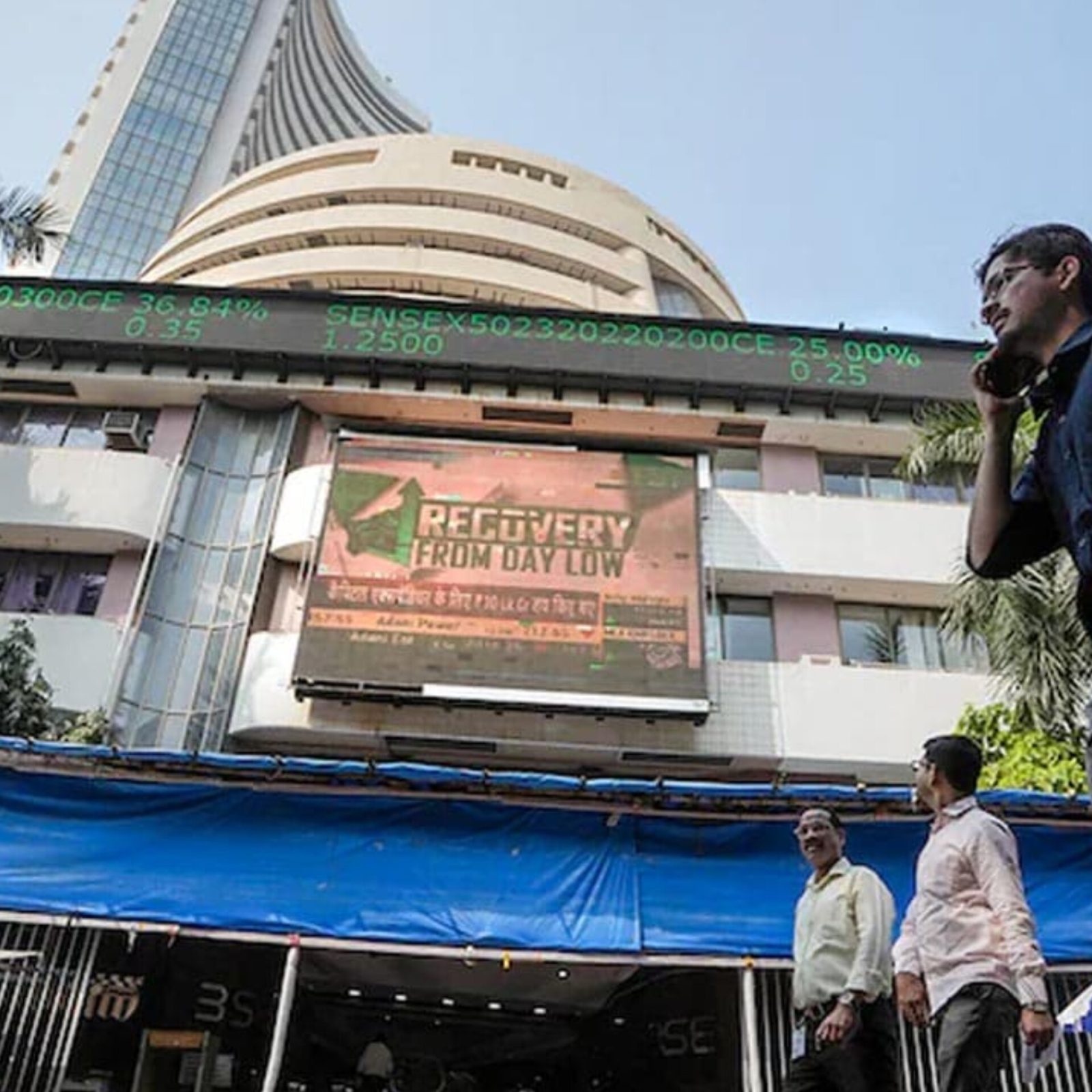
Adani Group stocks surged on Friday after the Securities and Exchange Board of India (SEBI) cleared the group of fraud charges. SEBI dismissed all allegations made by US short seller Hindenburg Research in its January 2023 report. Adani Total Gas rose 10%, Adani Power jumped 7.4%, while Adani Enterprises gained 4.3%. SEBI said the transactions under review did not violate rules at that time and all loans were repaid. Chairman Gautam Adani welcomed the decision, saying the claims were baseless. He said the report caused huge investor losses and demanded an apology from those spreading false narratives. (PC: NDTV)
Brief by Shorts91 Newsdesk / 03:21pm on 18 Sep 2025,Thursday Business
Markets regulator SEBI has dismissed all allegations made by US short seller Hindenburg Research against the Adani Group. SEBI said there were no violations in the transactions between Adani companies and other firms, and all loans were repaid. The regulator confirmed that funds were used properly and no fraud was found. Adani Group chairman Gautam Adani said the findings proved the Hindenburg claims were “baseless.” He added that the report hurt investors and demanded an apology from those who spread false stories. Former SEBI director JN Gupta said the order gave final closure on the issue. (PC: NDTV)
Brief by Shorts91 Newsdesk / 01:12pm on 18 Sep 2025,Thursday Business
The Securities and Exchange Board of India (Sebi) has dismissed allegations of stock manipulation made by US-based short seller Hindenburg Research against Gautam Adani and Adani Group firms. In an official filing on Thursday, Sebi said its investigation could not establish any wrongdoing by Adani companies, including Adani Ports and Adani Power. The regulator confirmed that no liability or penalties would apply. Kamlesh C. Varshney, Sebi’s whole-time member, stated that the matter has been disposed of without directions. Hindenburg’s claims, first made in 2023, had caused major controversy and market turbulence around the Adani Group. (PC: Reuters)
Brief by Shorts91 Newsdesk / 10:59am on 16 Sep 2025,Tuesday Business
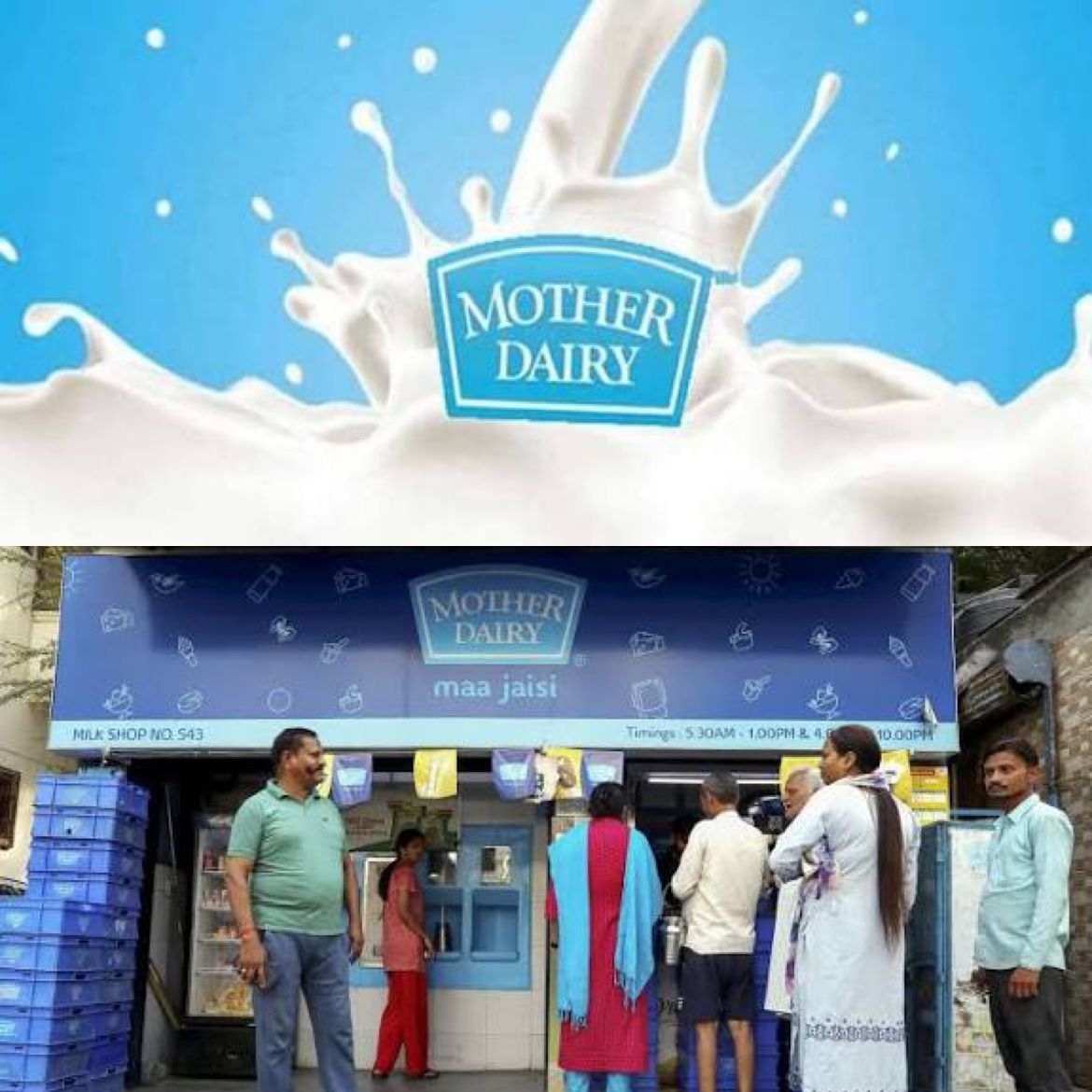
Mother Dairy has announced a price cut across its dairy and processed food products following the government’s GST 2.0 overhaul. Effective September 22, the company will pass on 100% of the tax benefits to consumers, with most items now falling under the zero or 5% GST slab. Prices of paneer, butter, cheese, ghee, milkshakes, and ice creams are dropping e.g., butter (500g) now costs ₹285, down from ₹305. UHT milk sees a ₹2 reduction, but regular pouch milk remains unchanged due to its GST-exempt status. Managing Director Manish Bandlish emphasized the consumer-centric move. With this initiative, Mother Dairy leads the way, and consumers await similar steps from other FMCG brands. (PC: ET Retail & News 18)

Brief by Shorts91 Newsdesk / 08:30am on 13 Sep 2025,Saturday Business
Amazon suspended Palestinian software engineer Ahmed Shahrour after he publicly opposed Project Nimbus, the company's $1.2 billion cloud computing contract with Israel's government. Shahrour, who works for Amazon's Whole Foods in Seattle, criticized the 2021 collaboration with Google that provides Israel with AI, data centers, and infrastructure through internal Slack channels and a letter to CEO Andy Jassy. Amazon cited policy violations, revoking his system access and deleting messages. Shahrour wrote he experiences "constant dissonance" working while his people in Gaza suffer, urging colleagues to oppose the contract. Critics argue Project Nimbus technology could support military operations and surveillance in occupied Palestinian territories. Amazon spokesperson Brad Glasser stated they don't tolerate threatening workplace behavior. (PC: NDTV)
Brief by Shorts91 Newsdesk / 03:40am on 11 Sep 2025,Thursday Business
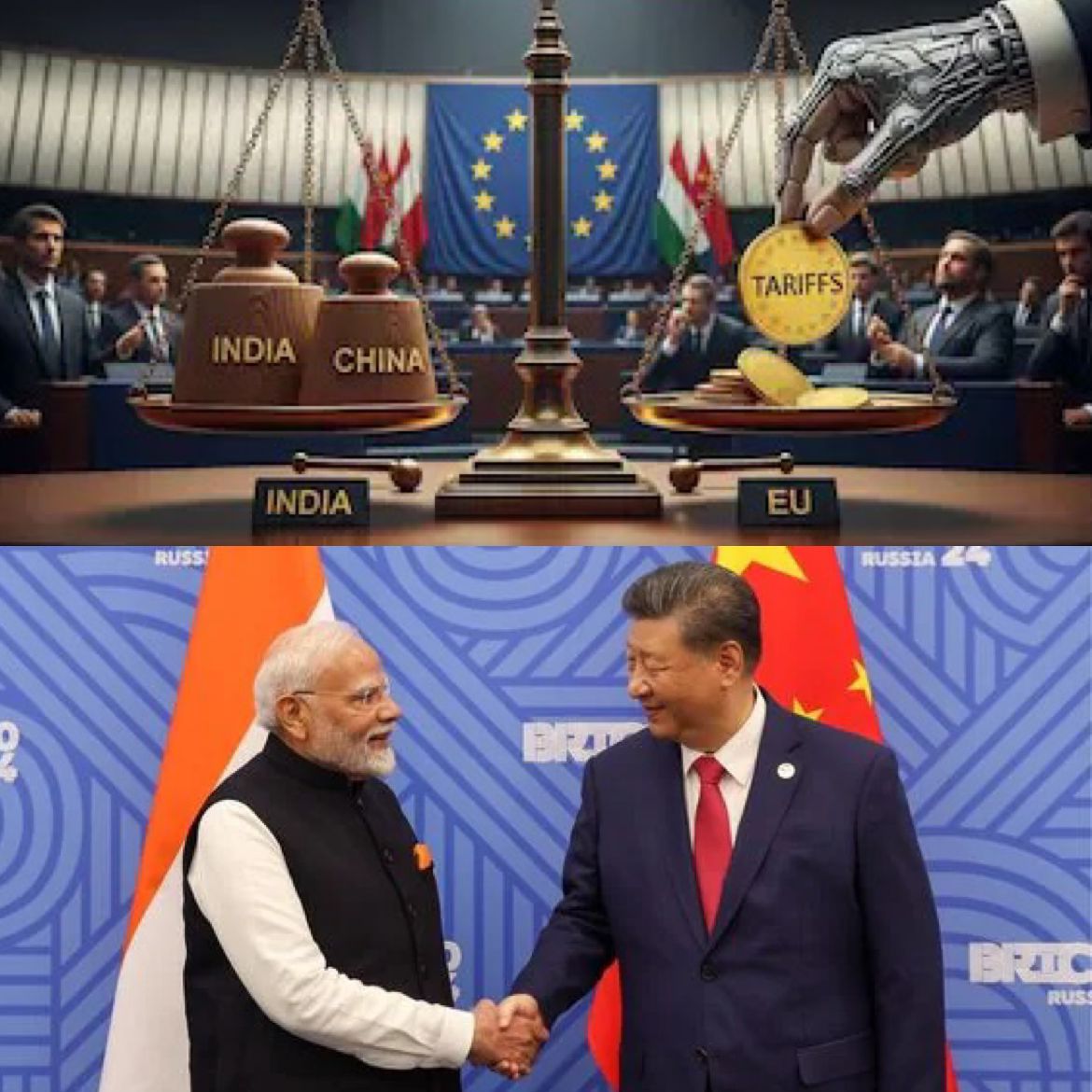
The European Union is unlikely to impose steep tariffs on India and China despite President Trump's pressure during Washington talks this week. Trump urged 100% tariffs on both nations to squeeze Russia's energy revenues by targeting major Russian oil buyers. EU sources explained that unlike sanctions, tariffs require formal investigations lasting months to establish legal basis. The EU has already tightened Russia sanctions, adding Chinese banks and an Indian refinery in July, but considers sweeping tariffs a separate, higher threshold matter. Brussels is negotiating a trade agreement with New Delhi and won't jeopardize it. Officials warn broad tariffs are risky and overly blunt compared to targeted entity listings. (PC: Mint & News 18)

Brief by Shorts91 Newsdesk / 12:23pm on 07 Sep 2025,Sunday Business
Hyundai and Tata Motors announced car price cuts following GST rate reductions effective September 22. The 56th GST Council reduced taxes on small cars from 28% to 18%, while SUVs face 40% tax without cess and electric vehicles remain at 5%. Both companies will pass complete benefits to customers. Hyundai's biggest cuts include Tucson at Rs 2.4 lakh, i20 N Line at Rs 1.08 lakh, and Venue at Rs 1.23 lakh. Tata's reductions range from Tiago at Rs 75,000 to Nexon at Rs 1.55 lakh and Safari at Rs 1.45 lakh. This follows similar announcements by Mahindra and Renault. Both companies emphasized the reform will boost consumer confidence and make personal mobility more accessible across India.