
Brief by Shorts91 Newsdesk / 01:00pm on 23 Sep 2024,Monday Tech Today
The use of AI is transforming the dead-celebrity industry, with estates generating significant revenue. Michael Jackson's estate, despite being $500 million in debt at the time of his death, has earned $2 billion due to AI-driven projects. James Dean, Judy Garland, and others now narrate books through AI voice-cloning startup ElevenLabs. AI has also recreated digital versions of stars like Paul Walker and Peter Cushing. With ongoing demand for AI-generated content, experts predict this could become a primary revenue source for deceased celebrities' estates within five years.
Brief by Shorts91 Newsdesk / 05:25pm on 16 Sep 2024,Monday Tech Today
TikTok argued in a Washington DC appeals court that a US law forcing it to sell its US operations or face a ban would have a "staggering" impact on free speech. The law, aimed at addressing data security concerns over TikTok's links to China, was called unconstitutional by TikTok’s lawyer, Andrew Pincus. He emphasized that TikTok's parent company, ByteDance, is not controlled by China. The US Department of Justice countered, citing national security risks. The case, involving 170 million US users, could reach the Supreme Court, with concerns over global free speech at stake.

Brief by Shorts91 Newsdesk / 07:23am on 15 Sep 2024,Sunday Tech Today
Indian engineers have made groundbreaking contributions across various industries, quietly revolutionizing technology and healthcare worldwide. Amar Bose created the first noise-cancelling headphones, transforming the audio industry. Ajay Bhatt led the invention of the USB and AGP, while Krishna Bharat built Google News, an automated news aggregator. Vinod Dham, the 'Father of the Pentium Processor,' co-invented Intel’s first flash memory technology. Nitesh Kumar Jangir invented 'Saans,' a neonatal breathing device saving premature babies, and Arogyaswami Paulraj developed MIMO, revolutionizing wireless broadband access for billions.

Brief by Shorts91 Newsdesk / 01:40pm on 13 Sep 2024,Friday Tech Today
Tech giants like Apple, Dell, and IBM have laid off over 27,000 employees amid an industry shift toward AI and cybersecurity. Companies such as Cisco and Intel are also restructuring due to declining IT product demand and a focus on emerging technologies. As traditional IT skills lose relevance, the layoffs underscore the need for upskilling in fields like AI, cloud computing, and data analytics. Experts suggest IT professionals should proactively learn new skills to remain competitive in this rapidly evolving landscape, as adaptability will be key to career survival and advancement.
Brief by Shorts91 Newsdesk / 02:14pm on 10 Sep 2024,Tuesday Tech Today
Apple has officially discontinued the iPhone 15 Pro and iPhone 13 following the launch of its new iPhone 16 series. The iPhone 15 Pro, introduced last year, and the iPhone 13, a popular model, are no longer available on Apple’s official store but can still be purchased through e-commerce platforms like Flipkart and Amazon. The iPhone 13 is priced at Rs 50,499 on Flipkart, while the iPhone 15 Pro is available for Rs 1,29,800. The new iPhone 16 series starts at Rs 79,900 and will be available for pre-order from September 13.

Brief by Shorts91 Newsdesk / 06:06am on 10 Sep 2024,Tuesday Tech Today
Apple has launched the iPhone 16 series in India, featuring the iPhone 16, 16 Plus, 16 Pro, and 16 Pro Max. The iPhone 16 is priced at ₹79,900, and the 16 Pro Max at ₹1,44,900. Key upgrades include the A18 chipset, a 48MP main camera, and new AI-powered features like Apple Intelligence. The Pro models boast larger screens, a 6-core GPU, and enhanced camera systems with 4K120 video recording. Pre-orders begin on September 13, with sales starting on September 20 via Flipkart, Amazon, and Apple Store.

Brief by Shorts91 Newsdesk / 03:30pm on 01 Sep 2024,Sunday Tech Today
Congress leader Rahul Gandhi condemned the BJP government after two violent incidents involving Muslims over beef suspicion. In Maharashtra's Thane, a 72-year-old man was assaulted on a train after being accused of carrying beef, leading to the arrest of three individuals. In Haryana's Charkhi Dadri, a migrant worker from West Bengal was beaten to death by cow vigilantes on August 27. Gandhi accused the government of empowering violent groups targeting minorities and called for strict action against such elements. He stressed that attacks on communal unity are an attack on the Constitution.
Brief by Shorts91 Newsdesk / 01:49pm on 01 Sep 2024,Sunday Tech Today
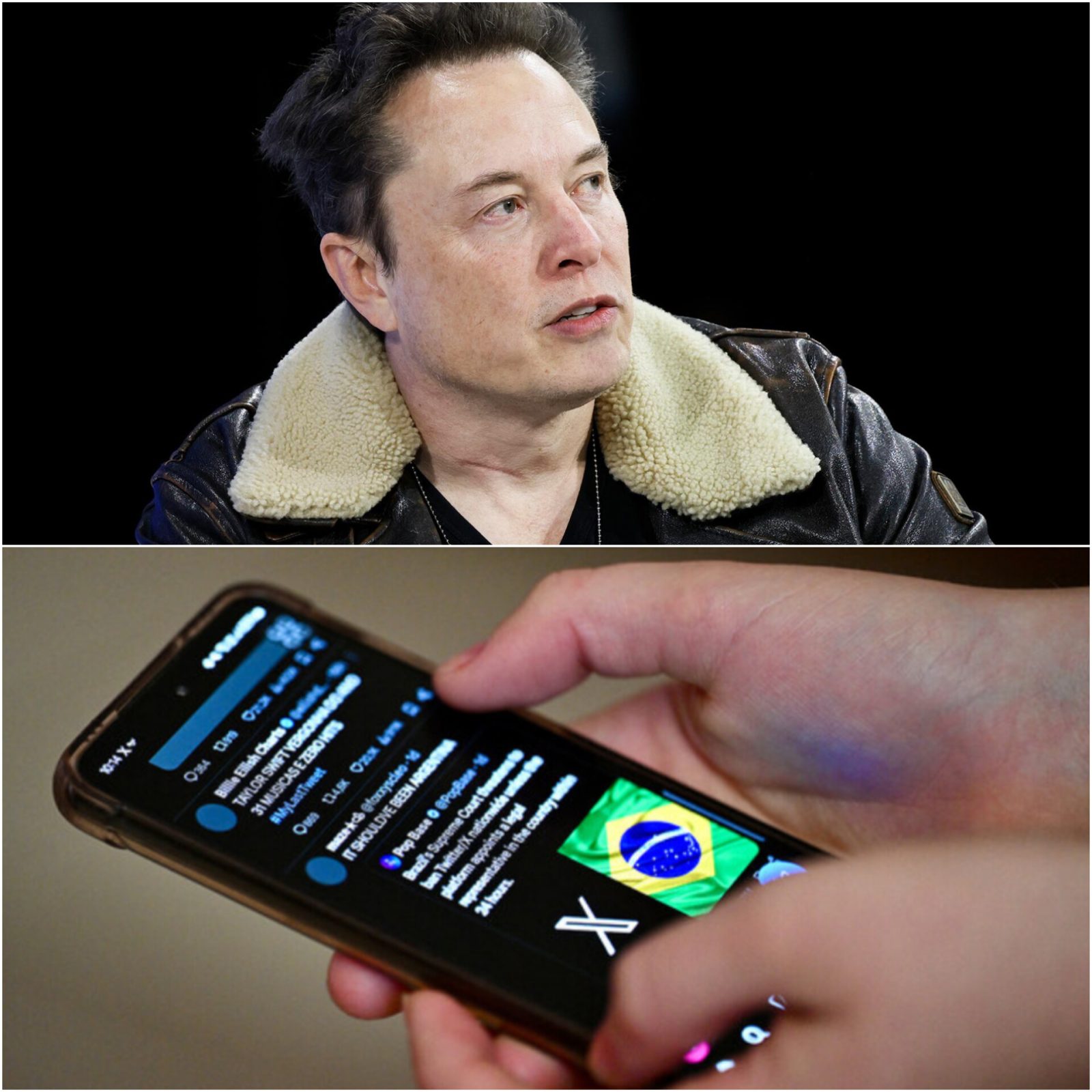
Brazil has blocked access to social network X, previously known as Twitter, following a decision by Supreme Court Justice Alexandre de Moraes. The suspension occurred after X owner Elon Musk refused to appoint a legal representative in Brazil, amid accusations of the platform aiding criminal activities and spreading fake news. Approximately 40 million Brazilians use X monthly. Brazil now joins other countries with restrictions on X, including China, Iran, and Russia. Users attempting to access X via VPN face daily fines of 50,000 reais ($8,900).

Brief by Shorts91 Newsdesk / 06:00am on 31 Aug 2024,Saturday Tech Today
David Game College in London is launching the UK's first "teacherless" GCSE class this September, where 20 students will learn through artificial intelligence (AI) rather than human teachers. The course uses AI platforms and virtual reality headsets to deliver personalized lessons. The AI adapts to each student's strengths and weaknesses, creating bespoke lesson plans that prioritize weaker subjects early in the term and save stronger topics for later revision. This innovative approach aims to tailor education to individual needs, providing a unique learning experience without traditional classroom teachers. The course represents a significant shift in how education can be delivered using technology.
Brief by Shorts91 Newsdesk / 03:59am on 28 Aug 2024,Wednesday Tech Today
In a brief disruption, microblogging site X experienced a global outage on Tuesday, affecting thousands of users. The platform's services were unavailable for a short period, causing inconvenience to its users. However, the issue was resolved, and services were restored. The company has not yet disclosed the cause of the outage. This incident highlights the importance of robust infrastructure and backup systems to ensure uninterrupted services.