Brief by Shorts91 Newsdesk / 07:17am on 25 Jun 2025,Wednesday Science
Falcon 9, the SpaceX rocket that launched the Axiom-4 mission, made a precise return to Earth just 8 minutes after liftoff. The rocket lifted off from Kennedy Space Center’s Launch Complex 39A, carrying Group Captain Shubhanshu Shukla—the second Indian in space—and three international astronauts aboard the Crew Dragon capsule. A last-minute weather data glitch nearly caused a seventh delay, but the launch proceeded successfully at 12:01 PM IST. While the capsule continues toward the International Space Station, Falcon 9 landed safely on its recovery platform, marking another successful reusable rocket operation and a milestone in India’s growing space legacy.
Brief by Shorts91 Newsdesk / 06:40am on 25 Jun 2025,Wednesday Science
India’s Group Captain Shubhanshu Shukla has successfully launched into space aboard SpaceX’s Crew Dragon, marking liftoff of the historic Axiom-4 mission from NASA’s Kennedy Space Center. The Falcon 9 rocket carried Shukla and three international astronauts into orbit at 12:01 PM IST, beginning a 14-day scientific expedition to the International Space Station. Shukla becomes the first Indian to pilot a commercial crew mission and the second Indian in space since Rakesh Sharma in 1984. The Axiom-4 mission highlights growing Indo-US collaboration and India’s expanding footprint in commercial space missions, ushering in a new era of private-led orbital exploration.
Brief by Shorts91 Newsdesk / 06:27am on 25 Jun 2025,Wednesday Science
India is moments away from making history as Group Captain Shubhanshu Shukla prepares for liftoff aboard the Axiom-4 mission. Safely strapped inside the SpaceX Dragon spacecraft, Shukla will become the second Indian in space after Rakesh Sharma. The mission is scheduled to launch at 12:01 PM IST atop a Falcon 9 rocket from NASA’s Kennedy Space Center. He will pilot the 14-day mission to the International Space Station alongside astronauts from the US, Poland, and Hungary. With all systems green and the launch escape system armed, the countdown has begun. Ax-4 marks a major Indo-US milestone in private space exploration.
Brief by Shorts91 Newsdesk / 06:20am on 25 Jun 2025,Wednesday Science
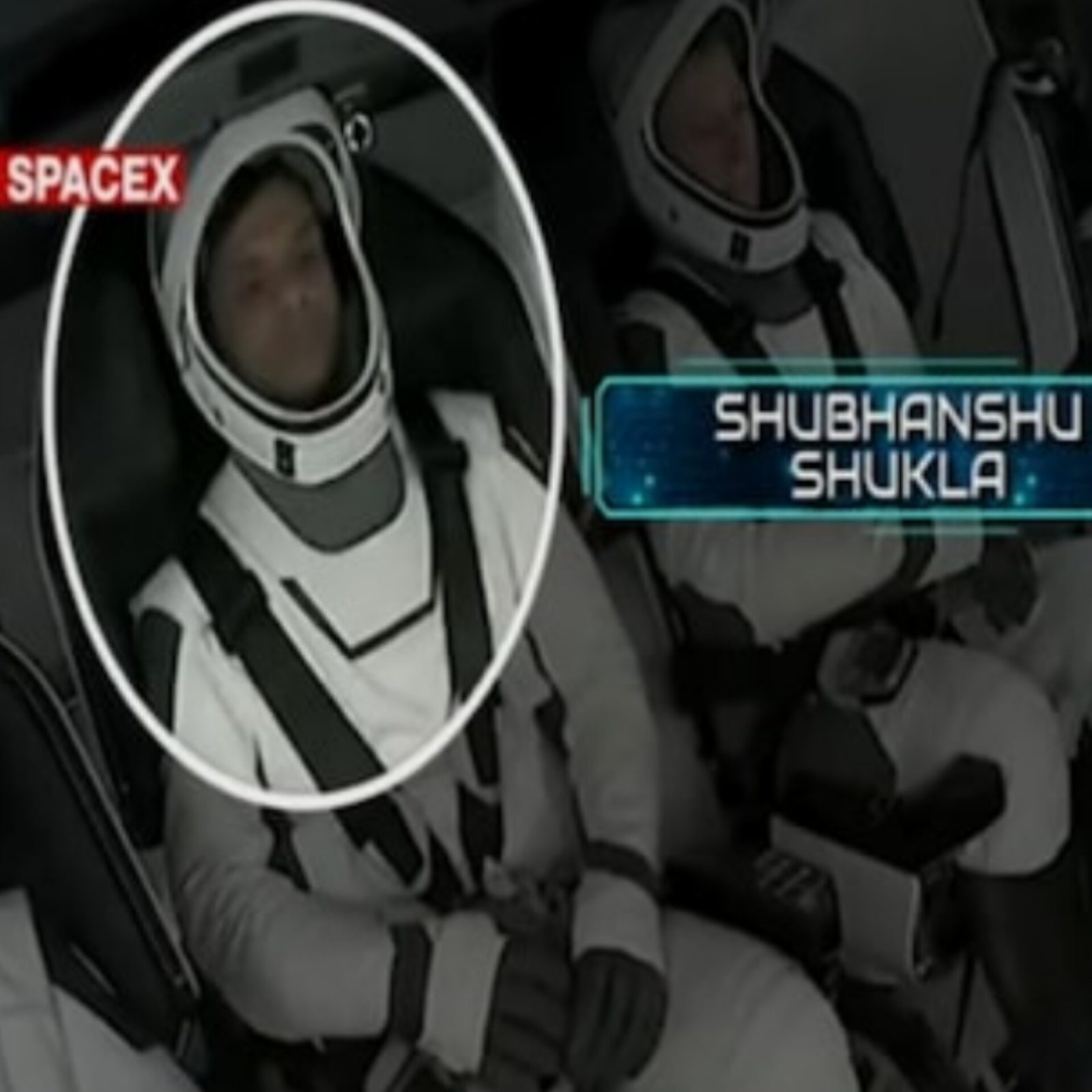
India's space ambitions take flight as first visuals show Group Captain Shubhanshu Shukla seated inside the SpaceX Crew Dragon spacecraft, set to launch at 12:01 PM IST today from NASA’s Kennedy Space Center. The 39-year-old IAF pilot will become India’s second astronaut in space after Rakesh Sharma. He joins Peggy Whitson (USA), Slawosz Uznanski-Wisniewski (Poland), and Tibor Kapu (Hungary) on the 14-day Axiom-4 mission, conducting 60 scientific experiments, including 7 from India. “I carry the hopes and dreams of a billion hearts,” Shukla said. The launch marks a milestone in Indo-US space ties and commercial space exploration. (PC: NDTV)
Brief by Shorts91 Newsdesk / 06:08am on 25 Jun 2025,Wednesday Science
India’s second astronaut, Group Captain Shubhanshu Shukla, is all set for launch aboard the SpaceX Dragon spacecraft at 12:01 PM IST today after a last-minute technical issue with wind data upload was successfully resolved. Shukla, serving as pilot on the Axiom-4 mission, will embark on a 14-day journey to the International Space Station (ISS) alongside astronauts from the US, Poland, and Hungary. The Indo-US mission includes 60 scientific experiments, with Shukla leading 7 Indian-designed microgravity studies. Operated by Axiom Space, Ax-4 signals India’s expanding role in commercial space exploration and marks a new chapter in global orbital research cooperation.
Brief by Shorts91 Newsdesk / 05:57am on 25 Jun 2025,Wednesday Science
Group Captain Shubhanshu Shukla will pilot SpaceX’s advanced Dragon spacecraft today at 12:01 PM IST as part of Axiom Mission 4 (Ax-4), becoming the first Indian to fly to the ISS on a commercial space mission. Launched atop the reusable Falcon 9 rocket, Dragon features life-support systems, touchscreen controls, cargo space, and autonomous docking capabilities. Shukla will join NASA veteran Peggy Whitson (commander), and mission specialists from Poland and Hungary. The 14-day mission will conduct 60 scientific experiments and symbolizes the shift toward private space stations, with Axiom Space leading the post-ISS era of orbital research and international cooperation.
Brief by Shorts91 Newsdesk / 05:51am on 25 Jun 2025,Wednesday Science
Moments before lift-off, Group Captain Shubhanshu Shukla delivered a moving message during Axiom Space’s live broadcast, honoring his hero Wing Commander Rakesh Sharma, India’s first astronaut. With the Indian flag beside him, Shukla said Sharma’s space journey inspired his own dreams. Expressing heartfelt gratitude to his Axiom-4 crewmates, he called them “friends for life.” Shukla is set to become the first Indian to travel to the International Space Station (ISS) aboard the SpaceX Crew Dragon. The historic Indo-US mission, “Akash Ganga,” marks a major milestone in India’s space legacy, four decades after Sharma’s iconic “Saare Jahan Se Achha” moment.
Brief by Shorts91 Newsdesk / 05:44am on 25 Jun 2025,Wednesday Science
India is counting down to a historic moment as Group Captain Shubhanshu Shukla prepares to lift off for space at 12:01 PM IST—just one hour away. Flying aboard SpaceX’s Crew Dragon as part of Axiom Mission 4, the 39-year-old Indian Air Force pilot will become the country’s second astronaut in space since Rakesh Sharma in 1984. The mission, a result of the 2023 India-US space agreement, will include 60 scientific experiments—7 led by Indian researchers. Dubbed “Akash Ganga,” the flight underscores growing Indo-US space cooperation. Shukla’s journey will also include live outreach from the International Space Station.
Brief by Shorts91 Newsdesk / 04:34am on 25 Jun 2025,Wednesday Science
Group Captain Shubhanshu “Shux” Shukla, India’s second astronaut after Rakesh Sharma, is set to pilot the Axiom‑4 private mission aboard SpaceX’s Crew Dragon and Falcon 9. The launch from Kennedy Space Center is scheduled today at 12:01 pm IST, with docking at the ISS expected tomorrow at 4:30 pm IST . Over 14 days in microgravity, Shukla will conduct seven Indian science experiments—ranging from seed germination to muscle regeneration—while commanding 60 studies across international teams . The mission bolsters India’s Gaganyaan ambitions and enhances its spaceflight credentials . Veteran astronaut Peggy Whitson leads the crew, with SpaceX reporting favorable 90% weather conditions.
Brief by Shorts91 Newsdesk / 03:24am on 25 Jun 2025,Wednesday Science
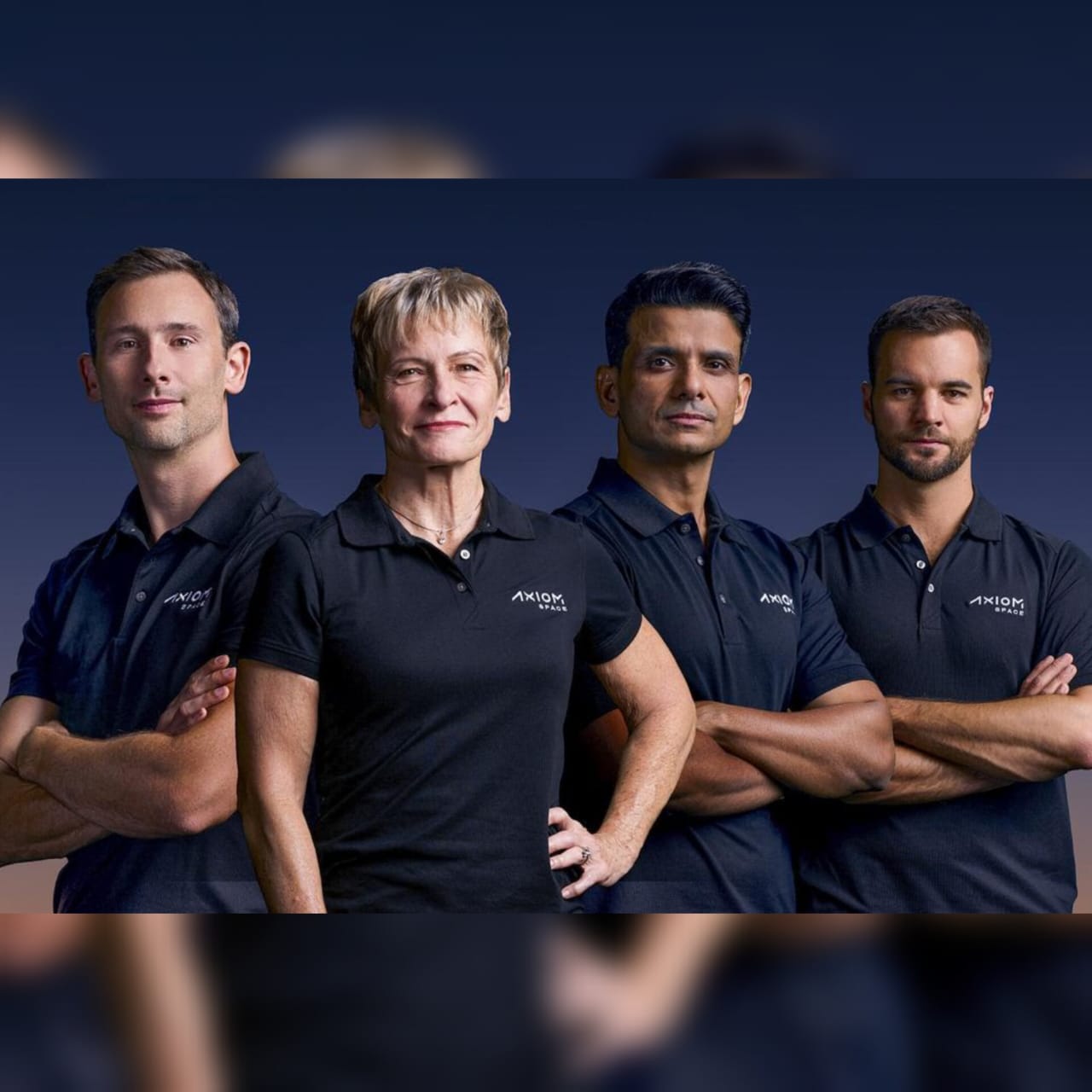
SpaceX has confirmed that all systems are nominal and the weather forecast gives a 90% chance of favorable conditions for the Axiom‑4 mission lift-off scheduled for Wednesday, 25 June 2025 (12:01 PM IST / 2:31 AM EDT) from Kennedy Space Center’s LC‑39A . The crew includes India’s Shubhanshu Shukla, former NASA astronaut Peggy Whitson, Poland’s Sławosz Uznański‑Wiśniewski, and Hungary’s Tibor Kapu aboard SpaceX’s Falcon 9 and Dragon capsule C213 . After delays due to weather, ISS module leaks, and LOx issues, the mission now targets docking on 26 June (~4:30 PM IST) for approximately two weeks of research and STEM demonstrations. (PC: PTI)