Brief by Shorts91 Newsdesk / 04:37pm on 10 Aug 2026,Monday Science
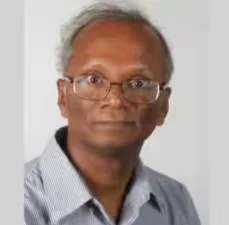
Indian physicist Professor Deepak Dhar has won the 2026 Dirac Medal for contributions to statistical mechanics and complex systems. The International Centre for Theoretical Physics honour is shared with Bernard Derrida, Marc Mezard and Haim Sompolinsky for advancing equilibrium statistical mechanics and extending it to non-equilibrium systems, optimisation, theoretical neuroscience and AI. Dhar’s sandpile-model research showed how simple interactions can trigger complex, unpredictable behaviour, with applications to earthquakes, traffic jams and financial-market fluctuations. Born in Pratapgarh, Uttar Pradesh, Dhar studied at Allahabad University and IIT Kanpur before joining Caltech on a Richard Feynman fellowship. He worked as Feynman’s teaching assistant, earned his PhD in 1978, then returned to India joining TIFR. (PC: The Economic Times)
Brief by Shorts91 Newsdesk / 05:01am on 10 Aug 2026,Monday Science
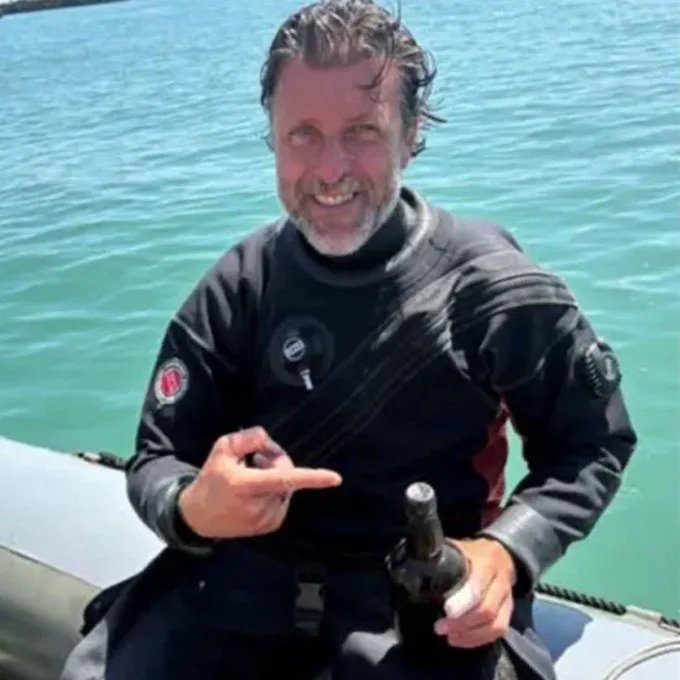
Up to 20 bottles of Guinness dating to 1864 have been discovered in the wreck of the Mindora, around five kilometres off Dover. Belgian underwater photographer Stefan Panis found the bottles in the ship’s cargo, preserved in constant high pressure and complete darkness after the vessel sank following a collision on November 27, 1864, while travelling from London to Vancouver. Samples have been sent to microbiologists at KU Leuven University in Belgium for DNA analysis. Researchers hope they can recover enough DNA to recreate the original 1860s Guinness recipe. Panis, who has dived for over 40 years, initially recovered one bottle and believes more cases could remain. Guinness’s archive team is assessing the discovery. (PC: X/@thefreeledger)
Brief by Shorts91 Newsdesk / 04:10am on 08 Aug 2026,Saturday Science
Ravi Tamta, a young innovator from Almora, Uttarakhand, has successfully test-flown a prototype of an electric flying vehicle. Called HAPIDA SKYNeX, the vehicle was developed through Tamta’s startup, Hapida Sky Private Limited. Unlike many experimental flying vehicles, it does not use aviation fuel or ethanol. It runs fully on electricity and produces zero tailpipe emissions. Tamta aims to make personal air travel safe, affordable and sustainable in India. The technology could help connect remote Himalayan areas and support disaster relief. It could also boost tourism. However, the vehicle still needs more tests and regulatory approvals before commercial use.
Brief by Shorts91 Newsdesk / 06:14am on 06 Aug 2026,Thursday Science
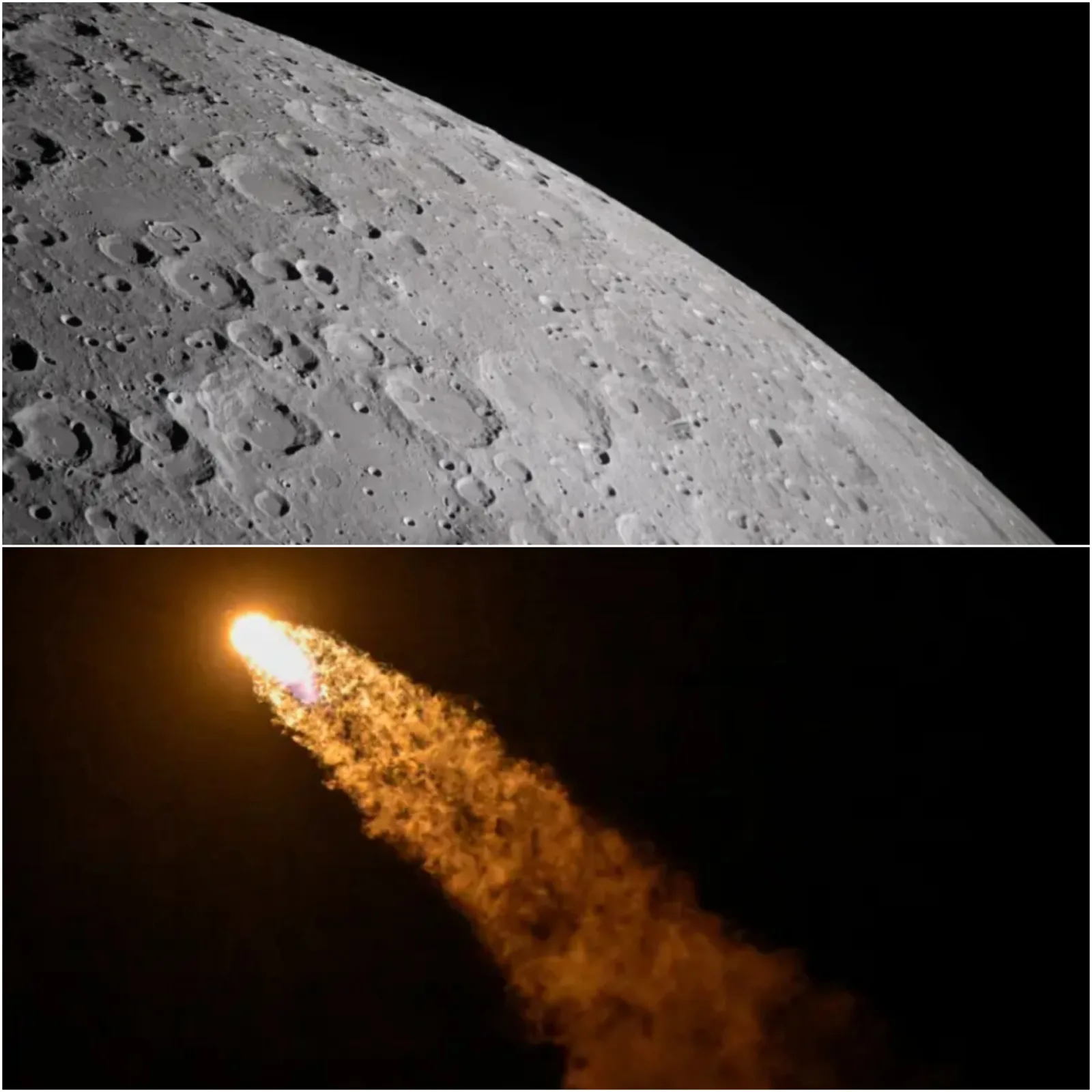
A discarded second stage of a SpaceX Falcon 9 rocket has crashed into the Moon, creating a new crater near the Einstein Crater. The 4-tonne rocket stage, launched in early 2025, struck the lunar surface at about 8,700 km/h after its orbit was gradually altered by the gravitational pull of the Sun, Earth and Moon. NASA's Lunar Reconnaissance Orbiter and South Korea's Danuri spacecraft will study the impact site to better understand crater formation and lunar dust. The collision is only the second known case of accidental rocket debris striking the Moon.
Brief by Shorts91 Newsdesk / 09:56am on 05 Aug 2026,Wednesday Science
A part of a SpaceX Falcon 9 rocket is believed to have crashed into the Moon after drifting through space for months. The 4,000kg upper stage separated from the rocket after launch as planned but later entered an unintended path toward the lunar surface. Scientists are expected to confirm the impact using ground-based telescopes, as no live images of the event are available. NASA said the crash poses no risk to Earth and will provide valuable data to improve tracking of objects in space. Experts also say the incident highlights growing concerns about space debris and its effect on future space missions. (PC: BBC)

Brief by Shorts91 Newsdesk / 06:38pm on 28 Jul 2026,Tuesday Science
China has completed and tested the world's largest 582-tonne superconducting fusion magnet, marking a major milestone in its artificial Sun programme. Developed by the Chinese Academy of Sciences, the giant magnet will generate powerful magnetic fields to contain superheated plasma inside a fusion reactor. The breakthrough supports China's goal of producing electricity from nuclear fusion by around 2030. Researchers said the technology was developed entirely with domestic expertise and materials. While major engineering challenges remain before commercial fusion becomes a reality, the achievement strengthens China's position in the global race to develop virtually limitless, carbon-free clean energy. (PC: India Today)

Brief by Shorts91 Newsdesk / 06:24pm on 18 Jul 2026,Saturday Science
Skyroot Aerospace co-founder and CEO Pawan Kumar Chandana has become a symbol of India's growing private space sector after Vikram-I became the country's first privately developed rocket to reach space. Chandana, who once scored 51 marks in mathematics, later cracked the IIT entrance exam, joined IIT Kharagpur and worked at ISRO on the GSLV Mk III programme. In 2018, he co-founded Skyroot Aerospace with fellow former ISRO engineer Naga Bharath Daka. Today, the Hyderabad-based startup is leading India's private space revolution, proving that curiosity, determination and innovation matter more than early academic setbacks. (PC: X)
Brief by Shorts91 Newsdesk / 02:25pm on 18 Jul 2026,Saturday Science
Skyroot Aerospace successfully launched Vikram-1, India’s first privately developed orbital rocket, from the Satish Dhawan Space Centre in Sriharikota on Saturday. The rocket completed all four stages and deployed its payloads successfully on its first attempt. The mission, called Mission Aagaman, is a major step for India’s private space sector. Vikram-1 can carry payloads of up to 350 kilograms into Low Earth Orbit. The launch also carried technology test payloads and symbolic items. Prime Minister Narendra Modi congratulated the Skyroot team. The successful mission is expected to boost India’s commercial space industry and future satellite launches.
Brief by Shorts91 Newsdesk / 11:13am on 17 Jul 2026,Friday Science
Indian-origin NASA astronaut Anil Menon has begun his first mission to the International Space Station (ISS) after lifting off aboard Russia's Soyuz MS-29 spacecraft at 8:17 PM IST yesterday. The spacecraft launched from the Baikonur Cosmodrome in Kazakhstan, carrying Menon alongside Roscosmos cosmonauts Pyotr Dubrov and Anna Kikina. It successfully reached orbit and docked automatically with the ISS's Prichal module following a two-orbit journey lasting about three hours. According to NASA, the newly arrived crew will spend around eight months aboard the orbital laboratory conducting scientific research and technology demonstrations before returning to Earth in April 2027, completing Menon's maiden spaceflight mission.

Brief by Shorts91 Newsdesk / 04:01am on 17 Jul 2026,Friday Science
India’s space programme is grappling with a growing talent exodus as more than 100 scientists have resigned or opted for voluntary retirement from the Indian Space Research Organisation (Isro) in recent months. The Department of Space has responded by tightening rules governing resignations and voluntary retirement for personnel involved in flagship missions, including Gaganyaan. The departures come amid rising opportunities in India’s expanding private space sector, where scientists are reportedly attracted by higher salaries, stronger career growth and greater professional recognition. The trend has raised concerns about retaining experienced talent within the national space agency as India pursues ambitious space exploration and commercial space objectives in the coming years. (PC: Generative AI by India Today)