
Brief by Shorts91 Newsdesk / 03:47pm on 15 Apr 2024,Monday Science
Elon Musk predicts SpaceX will achieve crewed landing on Mars in 7-9 years, with initial unmanned missions in 5 years. Musk plans for thousands of spaceships to depart for Mars once landing capability is confirmed. Speaking with Norway’s Norges Bank Investment Management CEO Nicolai Tangen, Musk also outlines simultaneous Moon missions. He emphasizes the importance of becoming a multiplanetary species for preserving human consciousness, envisioning Mars as just one step in humanity's interplanetary migration. Musk asserts existing technology is sufficient for the ambitious endeavor.
Brief by Shorts91 Newsdesk / 03:24pm on 11 Apr 2024,Thursday Science
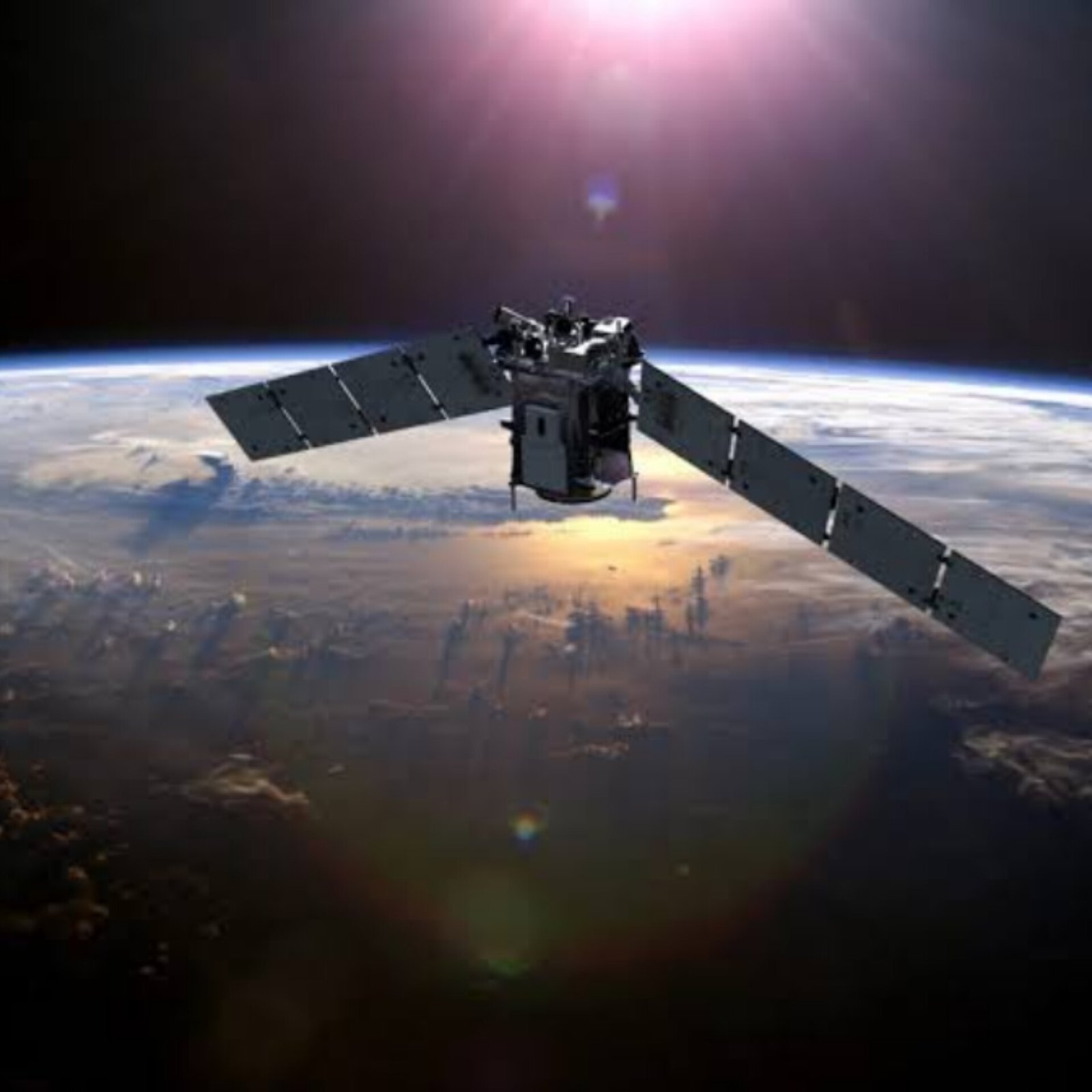
An American satellite narrowly escaped destruction after a Russian spacecraft came within 10 meters of it in space. The incident, which occurred in February, left NASA's deputy administrator, Colonel Pam Melroy, "really scared." The near miss involved NASA's Timed satellite and a defunct Russian spy satellite, Cosmos 2221, with experts warning that a collision could have resulted in thousands of bullet-fast debris pieces endangering other spacecraft and potentially human lives. Melroy emphasized the sobering reality of the situation, highlighting the need for heightened awareness and caution in managing space traffic.

Brief by Shorts91 Newsdesk / 12:56pm on 11 Apr 2024,Thursday Science
Aroh Barjatya, an Indian-born researcher, helmed NASA's recent mission launching three sounding rockets during the total solar eclipse on April 8. As a professor of engineering physics at Embry-Riddle Aeronautical University in Florida, Barjatya directs the Space and Atmospheric Instrumentation Lab. With a background in electronics engineering from Solapur's Walchand Institute of Technology and a PhD in spacecraft instrumentation from Utah State University, he aims to advance space research and education. Barjatya's leadership underscores India's contribution to cutting-edge scientific endeavors on the global stage.

Brief by Shorts91 Newsdesk / 12:57pm on 10 Apr 2024,Wednesday Science
Indian Space Research Organisation (ISRO) chief S Somnath announced Chandrayaan-4 as India's next moon exploration mission, aiming for an astronaut landing by 2040. Chandrayaan-4, a crucial step, focuses on lunar sample collection for analysis on Earth. ISRO also pursues numerous rocket, satellite, and technology projects. Notably, Chandrayaan-3's successful South Pole landing in August 2023 propelled India's lunar exploration strides. Additionally, India launched its first solar mission, Aditya-L1, in January. The Gaganyaan project, targeting human spaceflight, remains a significant endeavor, demonstrating India's ambitious foray into space exploration.

Brief by Shorts91 Newsdesk / 07:25pm on 09 Apr 2024,Tuesday Science
Renowned physicist Peter Higgs, famed for proposing the Higgs boson particle, dies at his Edinburgh, Scotland home at 94. His groundbreaking theory on particle mass was validated in 2012. Higgs, awarded the Nobel Prize in Physics in 2013, leaves behind a lasting legacy in the field of theoretical physics. Colleagues and scientists mourn the loss of a humble genius who revolutionized our understanding of the universe. Higgs' contributions to particle physics and his modest demeanor leave an indelible mark on the scientific community.
🚨RED ALERT: A new video just surfaced of the UFO spotted over Arlington Texas during the solar eclipse today and people are freaking out because it seems to disappear into the clouds ⚠️ pic.twitter.com/9Syu9hyPKK
— Matt Wallace (@MattWallace888) April 9, 2024
Brief by Shorts91 Newsdesk / 02:17pm on 09 Apr 2024,Tuesday Science
A video capturing what appears to be a UFO during Monday's solar eclipse in Arlington, Texas, has ignited social media frenzy. Matt Wallace, a free-speech advocate, shared the clip on X platform, garnering significant attention. The unidentified object swiftly moves through clouds before vanishing, leaving viewers puzzled. Despite widespread speculation, no official statement from NASA or authorities has been released. While some speculate it to be a genuine UFO sighting, others suggest it could be a shadow of a plane. The incident adds intrigue to the historic total solar eclipse witnessed across the United States, Mexico, Canada, and the Northern Atlantic region.
Brief by Shorts91 Newsdesk / 05:14am on 09 Apr 2024,Tuesday Science
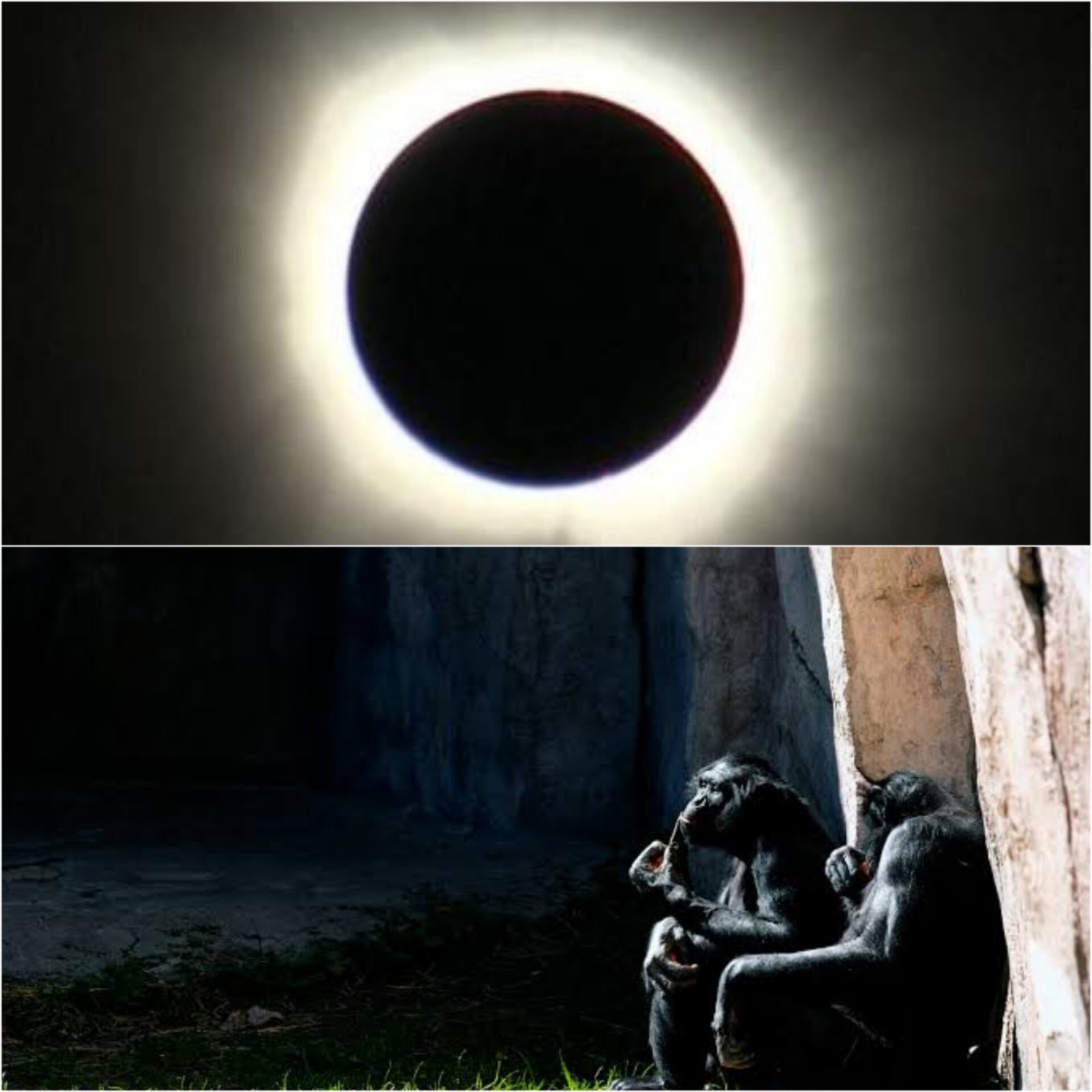
During the 2024 total solar eclipse, zoo animals such as giraffes, gorillas, and lions displayed uncommon behavior, observed by scientists and zookeepers at the Fort Worth Zoo in Texas. Elephants, giraffes, and other animals moved towards their barns as the sky darkened, while zebras and giraffes were seen running. Chimpanzees patrolled the premises, and birds like flamingos formed clusters before the totality. The eclipse, visible in the US, Canada, and Mexico, occurs when the Moon obscures the Sun. This fascinating phenomenon prompted curiosity and vigilance among the animal kingdom, adding another layer to the eclipse experience.
Take it all in.
— NASA (@NASA) April 8, 2024
We're getting our first views of the 2024 total solar #eclipse as its shadow makes landfall in Mazatlán, Mexico. pic.twitter.com/FdAACmQGkm
Brief by Shorts91 Newsdesk / 06:58pm on 08 Apr 2024,Monday Science
Rare total solar eclipse mesmerized millions as it darkened the Pacific coast of Mexico at 11:07 am (1807 GMT). The "path of totality" traversed Mexico, the United States, and Canada, captivating viewers with a celestial spectacle. NASA shared first glimpses of the eclipse in Mazatlán, Mexico, on Twitter. Festivals and viewing parties dotted the eclipse's path, with enthusiasts describing it as an emotional experience. Scientists seized the opportunity to study the Sun's corona, usually obscured by its blinding light. The next total solar eclipse visible from North America won't occur until 2044.

Brief by Shorts91 Newsdesk / 08:50am on 08 Apr 2024,Monday Science
Aroh Barjatya, director of SAIL at Embry-Riddle Aeronautical University, leads the APEP mission during the total solar eclipse on Apr. 8. The eclipse will pass over North America, causing temporary darkening. Barjatya explains that the eclipse creates atmospheric waves affecting radio communication. NASA launches three Black Brant IX sounding rockets from Wallops Flight Facility to study the ionosphere's response to the Sun's disappearance. This mission aims to understand how the eclipse impacts Earth's upper atmosphere.
Brief by Shorts91 Newsdesk / 04:35am on 08 Apr 2024,Monday Science
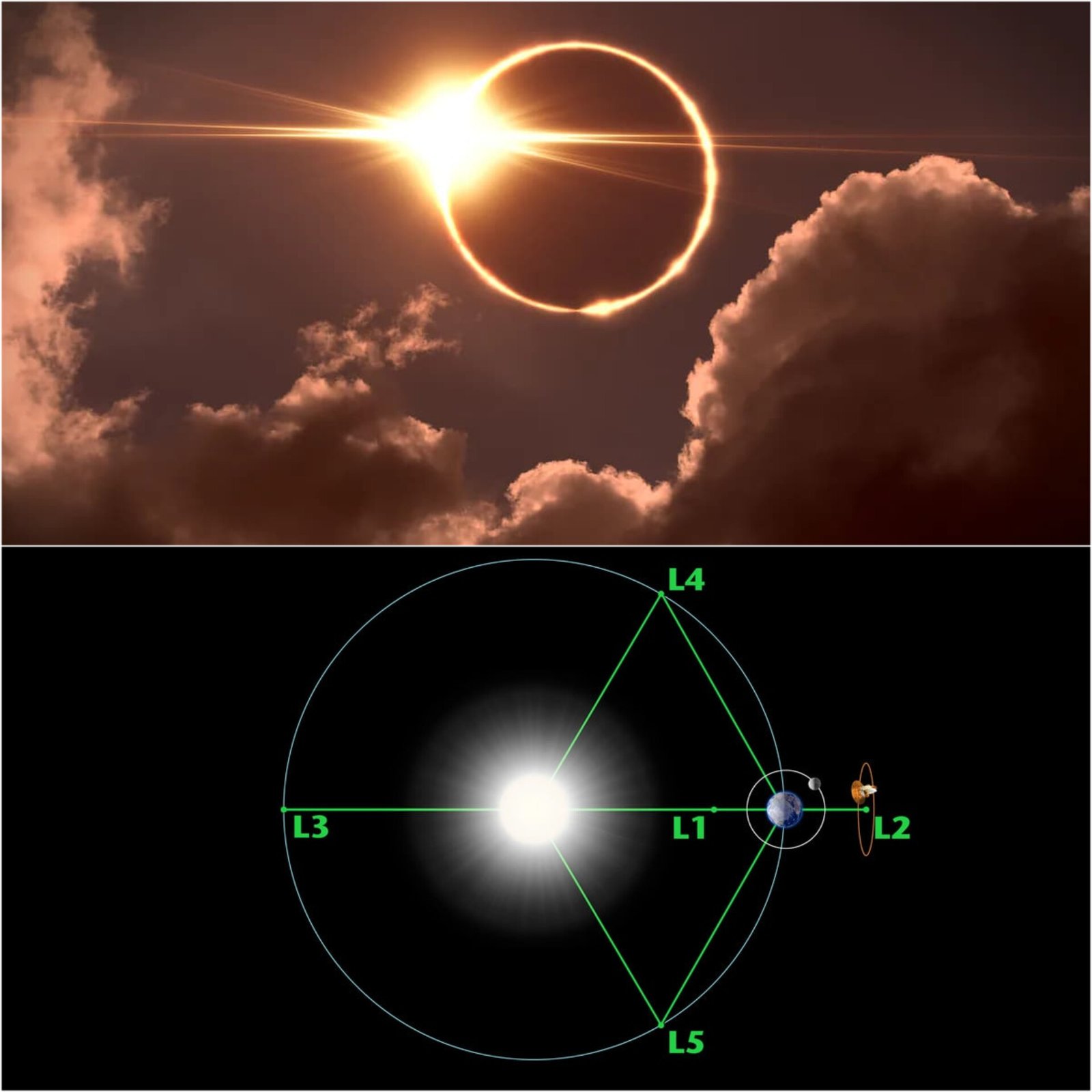
India's Aditya L1 satellite, designed for uninterrupted solar observation, will miss the total solar eclipse today as it remains strategically positioned to monitor the Sun continuously. Placed at Lagrange point 1, Aditya L1 provides a 24x7, 365-day view of the Sun, crucial for studying solar activity and space weather. Despite the eclipse's significance on Earth, the satellite's location ensures uninterrupted observations. Aditya L1's unique orbit offers valuable insights into solar dynamics, aiding scientific research. Meanwhile, ground-based observations during the eclipse will complement satellite data, enhancing our understanding of solar phenomena.