Brief by Shorts91 Newsdesk / 05:21am on 31 Jul 2025,Thursday Science
Launched on July 30, 2025 via ISRO’s GSLV‑F16 from Sriharikota, the NASA‑ISRO Synthetic Aperture Radar (NISAR)—a $1.5 billion mission—is the world’s first radar satellite to use dual-frequency sensors (NASA’s L‑band & ISRO’s S‑band). The “two‑eyed” payload enables it to map nearly all land and ice surfaces every 12 days, detecting changes down to a centimeter, day or night, through clouds and vegetation . Over its planned three‑year mission, NISAR will revolutionize monitoring of earthquakes, glacier melt, deforestation, landslides, infrastructure stability, agricultural patterns and more—delivering open-access data to scientists, policymakers, and disaster responders worldwide.
Brief by Shorts91 Newsdesk / 02:44am on 31 Jul 2025,Thursday Science
On July 30, 2025, the NASA-ISRO Synthetic Aperture Radar (NISAR) satellite was launched aboard India’s GSLV-F16 rocket from the Satish Dhawan Space Centre. Marking the first collaboration of its kind between NASA and ISRO on Earth observation, the mission aims to monitor minute shifts in the Earth’s surface—including landslides, earthquakes, glacial melt, and soil moisture—using advanced dual-frequency radar technology. NISAR will scan the Earth every 12 days, providing free and high-resolution data globally. This mission is a major step in understanding climate change, natural disasters, and land-use patterns with unprecedented accuracy. (PC: ISRO)
Brief by Shorts91 Newsdesk / 01:53pm on 30 Jul 2025,Wednesday Science
India successfully launched the NISAR satellite—a $1.5 billion joint mission between ISRO and NASA—on July 30 from Sriharikota. NISAR (NASA-ISRO Synthetic Aperture Radar) is the world’s first Earth-mapping satellite using dual-frequency radar, capable of detecting Earth’s slightest shifts and changes every 12 days. Weighing 2,393 kg, it will orbit the planet every 97 minutes, aiding global disaster response, glacier tracking, and climate monitoring. The mission, a decade-long collaboration, marks a major leap in space-tech and environmental science. With near real-time, free data, India strengthens its leadership in global climate action and scientific cooperation.
Brief by Shorts91 Newsdesk / 12:16pm on 30 Jul 2025,Wednesday Science
The joint ISRO-NASA Earth observation satellite NISAR has successfully launched from the Satish Dhawan Space Centre in Sriharikota aboard India’s largest rocket, the GSLV Mk II. The 2,392 kg satellite will enter an 8–10 day deployment phase followed by 65 days of engineering tests. NISAR, equipped with L-band (NASA) and S-band (ISRO) synthetic aperture radars, will map Earth's surface every 12 days with high precision, detecting even slight movements. The mission, 10 years in the making, will help monitor earthquakes, landslides, and climate change, with special focus on Antarctica and global vegetation. Former ISRO chief K Sivan called it “a breakthrough.”

Brief by Shorts91 Newsdesk / 10:26am on 30 Jul 2025,Wednesday Science
Union Minister Jitendra Singh told the Lok Sabha that the forthcoming NASA–ISRO Synthetic Aperture Radar (NISAR) satellite—India’s first joint mission with NASA—will be a “game‑changer” in disaster monitoring and response . Once launched on July 30, 2025 from Sriharikota aboard GSLV‑F16, NISAR’s dual‑frequency radars will penetrate fog, cloud, and ice layers to deliver precise Earth‑observation data every 12 days . Singh highlighted applications across landslides, volcanic eruptions, cyclones, aviation, and shipping sectors. Data will be accessible globally—within 1–2 days routinely and within hours during emergencies—enabling faster policy decisions and humanitarian response. (PC: PTI)
Brief by Shorts91 Newsdesk / 07:02am on 30 Jul 2025,Wednesday Science
ISRO will launch the joint NASA–ISRO Synthetic Aperture Radar (NISAR) satellite on July 30, 2025, using the GSLV-F16 rocket from Sriharikota. Weighing around 2,393 kg, NISAR will be placed in a 743 km Sun-synchronous orbit. This first-of-its-kind collaboration combines NASA’s L-band and ISRO’s S-band radars to capture high-resolution, all-weather images of Earth every 12 days. Designed to monitor changes in land, vegetation, glaciers, and disasters, NISAR represents a major leap in climate and disaster research. After a 90-day calibration phase, it will begin scientific operations, marking a $1.5 billion milestone in Indo-US space cooperation.

Brief by Shorts91 Newsdesk / 05:09am on 30 Jul 2025,Wednesday Science
Former ISRO scientist has hailed the NASA-ISRO Synthetic Aperture Radar (NISAR) mission as a landmark achievement that will highlight India’s advanced space engineering on the world stage. Scheduled for launch on July 30, 2025, from Sriharikota aboard the GSLV-F16, NISAR marks the first GSLV flight into Sun-Synchronous Orbit. The $1.5 billion satellite will provide critical Earth observation data using dual-frequency radars developed by both NASA and ISRO. The mission will aid global climate monitoring, disaster response, and Earth science research, reinforcing India's growing influence in international space collaborations and open-source scientific advancement. (PC: X)
Brief by Shorts91 Newsdesk / 01:44am on 30 Jul 2025,Wednesday Science
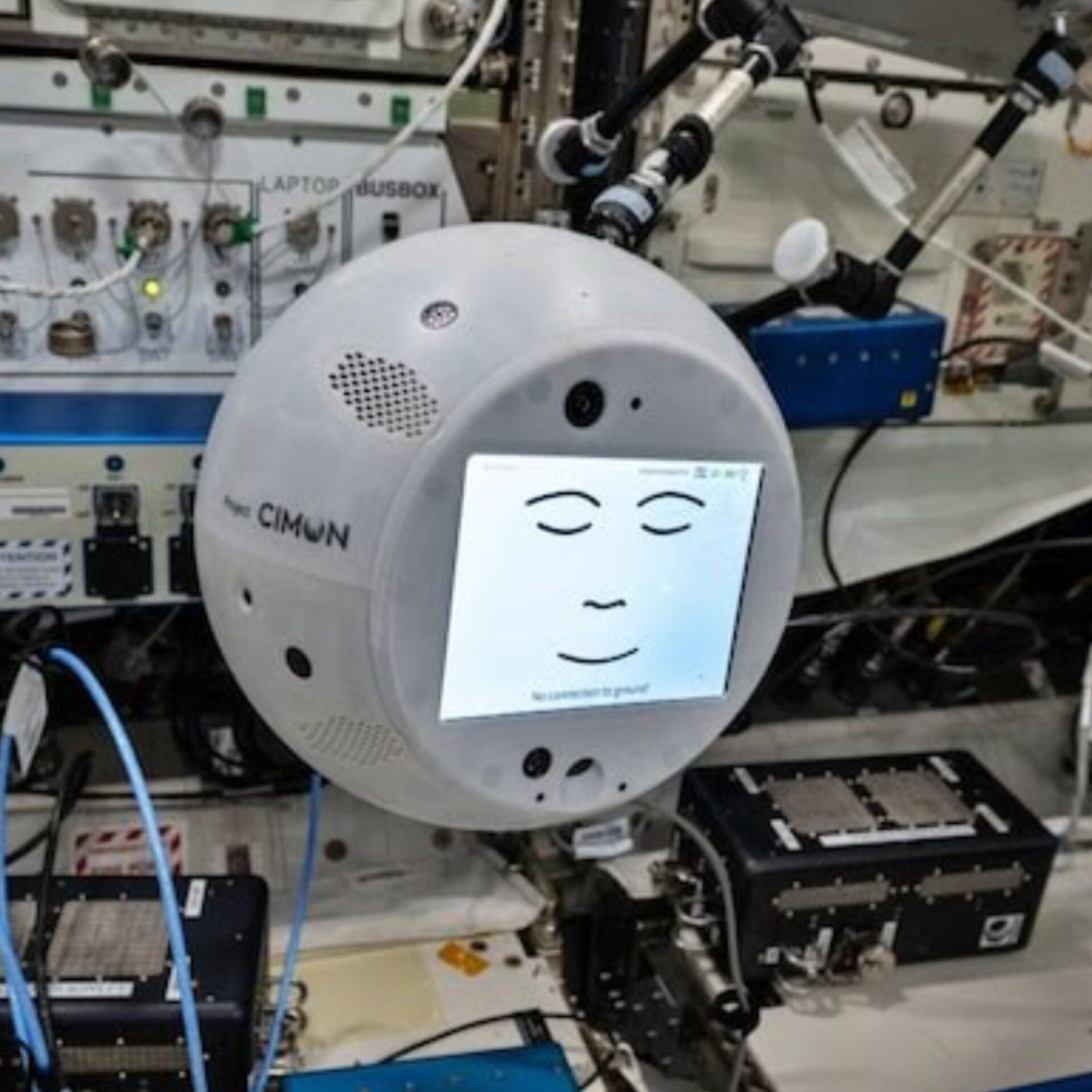
Project CIMON (Crew Interactive Mobile Companion) is an AI-powered floating robot currently being tested aboard the International Space Station. Designed to assist astronauts hands‑free, Cimon can retrieve documents, guide procedures, or record experiments via voice control, reducing reliance on manuals and saving time . It also serves as a mobile camera and personal training aid. Jointly developed by Airbus, IBM (Watson AI), and Germany’s DLR, Cimon’s objectives include minimizing stress, improving efficiency, and testing human‑AI interaction for long-duration missions . Observations from the pilot deployment will help shape future AI companions for space and Earth applications. (PC: NASA)
Brief by Shorts91 Newsdesk / 01:30am on 30 Jul 2025,Wednesday Science
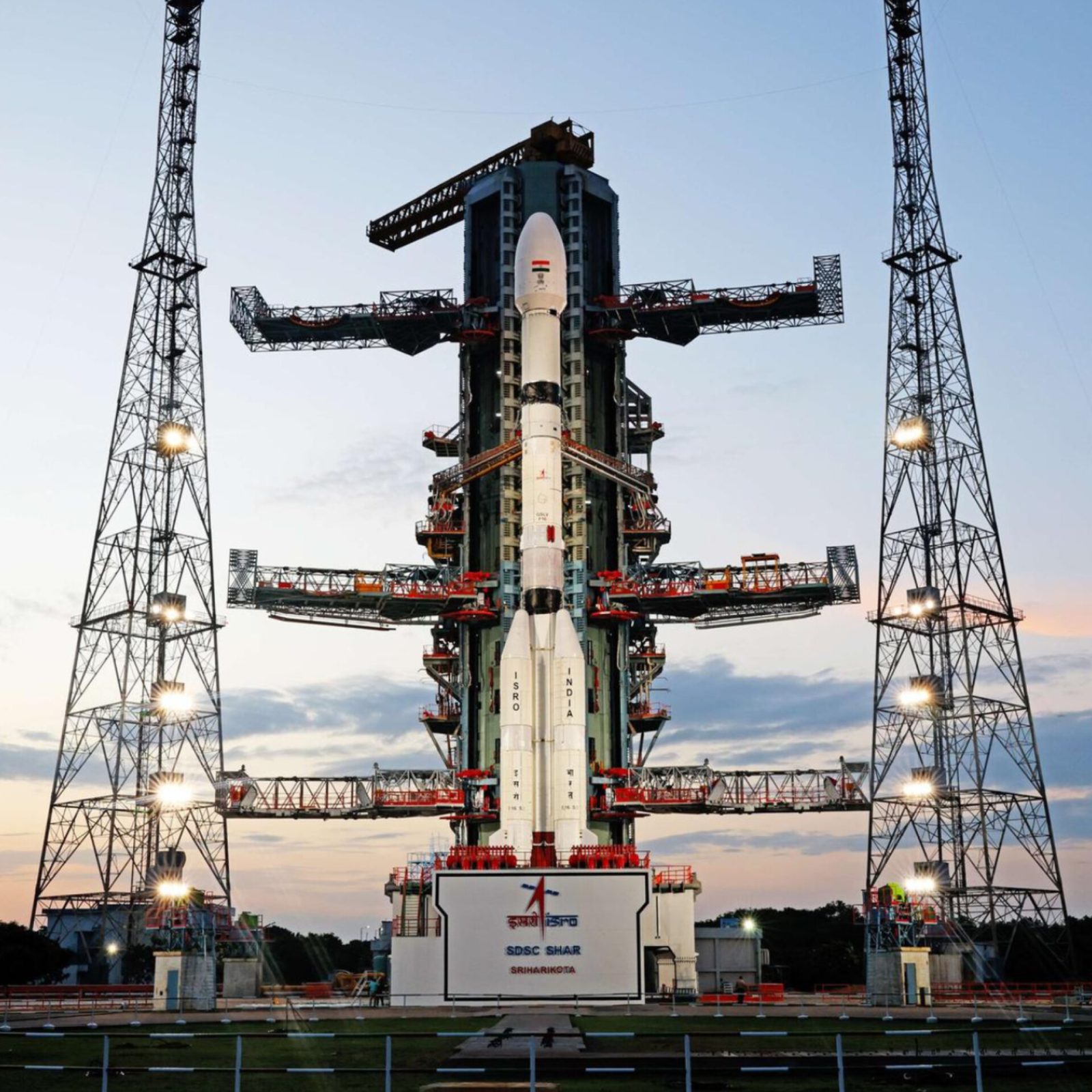
The Indian Space Research Organisation (ISRO) has commenced the ~27.5‑hour countdown ahead of the July 30, 2025 launch of the NASA–ISRO Synthetic Aperture Radar (NISAR) satellite. The launch aboard the GSLV‑F16 rocket from Sriharikota is scheduled for 5:40 PM IST, following countdown start at around 2:10 PM on July 29 . NISAR is a $1.5 billion joint mission, featuring dual-frequency (L‑band and S‑band) radar that will scan Earth every 12 days, day or night, through cloud cover . Its data will aid climate science, disaster response, and monitoring of land deformation, ice sheets, and ecosystems. (PC: ISRO)

Brief by Shorts91 NewsDesk / 10:47am on 29 Jul 2025,Tuesday Science
A mysterious interstellar object named 3I/ATLAS, traveling at 130,000 mph, is baffling scientists with its unusual trajectory and speed. Detected on July 1, 2025, it’s estimated to be 15 miles wide and will reach perihelion in November, temporarily vanishing from Earth’s view. Experts, including Harvard’s Avi Loeb, suggest it may be an alien surveillance probe, aligning eerily with Baba Vanga’s 2025 prophecy of extraterrestrial contact. Loeb warns of potential hostile intent, sparking global debate on planetary defense. The object’s strategic path near Jupiter, Mars, and Venus adds to speculation. As November approaches, astronomers and defense agencies are on high alert. (PC: News Bytes & Times Now)